
neuro-affirming best practice
-
inclusion:
Educational inclusion requires a cultural and systemic shift. We guide schools through neuro-affirming audits to identify and eliminate ineffective behaviour management, sensory frictions and unnecessary cognitive load.
We facilitate a whole-school culture where neurodivergence is expected, respected, and structurally accommodated.
-
pastoral:
Traditional behaviour policies can misinterpret neurodivergent communication as ‘defiance,’ triggering a sympathetic nervous system response.
Staff learn to decode distressed behaviour through a neurobiological lens; prioritising nervous system regulation over rigid compliance. This de-escalates crises, reduces exclusion rates, and embeds restorative, trust-based pastoral care.
-
academic:
Neurodivergent minds (Autistic/ADHD) are driven by novelty, urgency and interest (monotropism). When students cannot initiate tasks, their neurochemical barriers are not character flaws.
Practical, evidence-based strategies help staff to bypass executive dysfunction. With collaboration in the classroom, educators can unlock intrinsic motivation - turning academic barriers into pathways for better engagement.
neuro-affirming staff CPD
-
the culture:
CPD and INSET programmes guide staff through a transition from deficit-based SEND models to a neuro-affirming, social model for Autism, AuDHD, ADHD, and SpLDs.
We focus on the specific, frontline realities of supporting neurodivergent profiles - from PDA (Pervasive Demand for Autonomy) to masking. Staff leave with tailored strategies to resolve real-world friction and embed structural inclusion across the whole school.
-
the classroom:
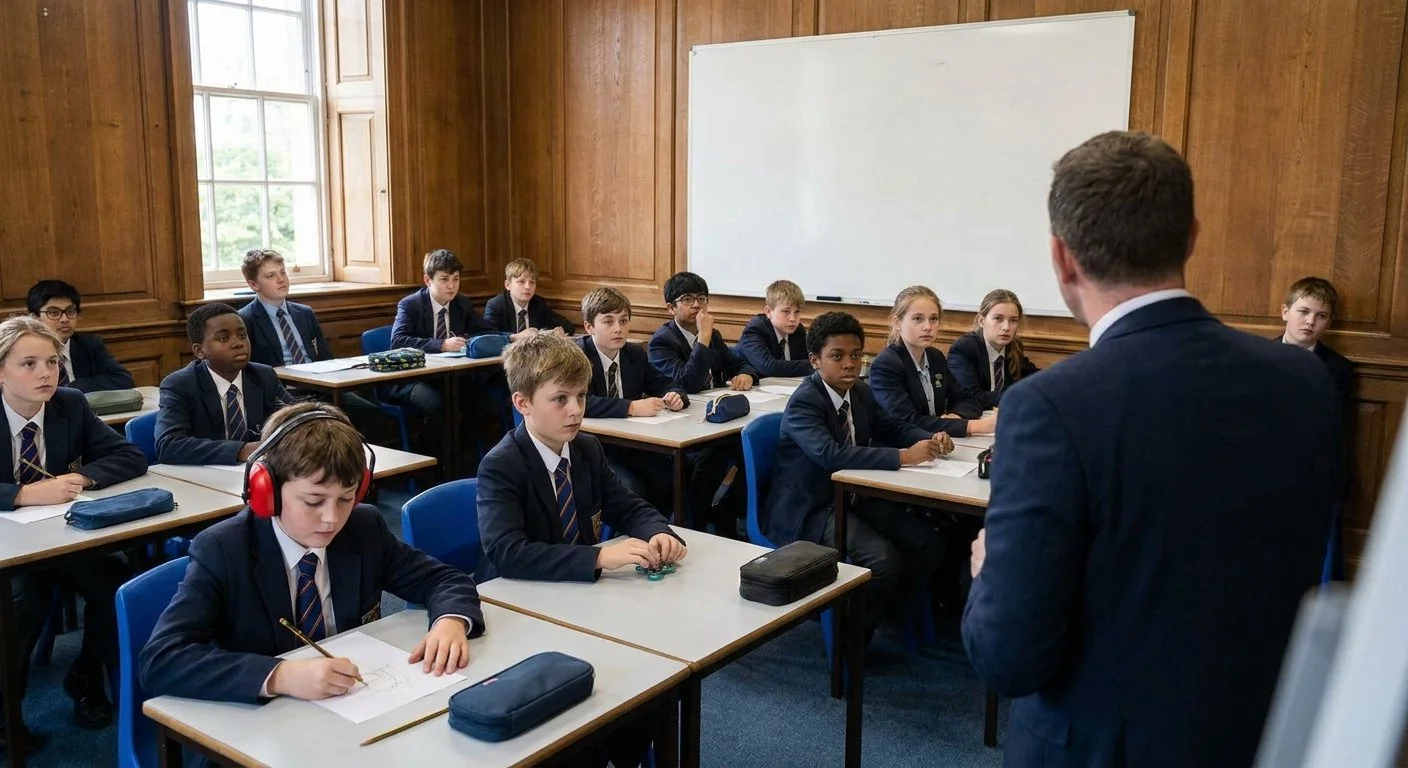
Our neuro-affirming CPD helps teachers translate complex clinical principles into everyday pedagogy. Staff will gain a profound understanding of neurodivergence, empowering them to provide evidence-based, attuned educational support.
Transform teaching routines, engineer low-demand environments rooted in psychological safety. Learn how to work with a student's neurology and unlock their potential.
-
attuned:
Understanding the neurobiological ‘why’ behind a student's distressed behaviour or disengagement , provides an instant paradigm shift, reminding staff that ‘non-compliant’ behaviour is a nervous system response, not a personal attack.
Neurodivergent students are not broken, they are navigating an educational system predominantly built for neurotypical profiles. By sharing lived experiences and practical frameworks, staff are better equipped and more confident to make a positive difference.
the parent community
-
alignment:
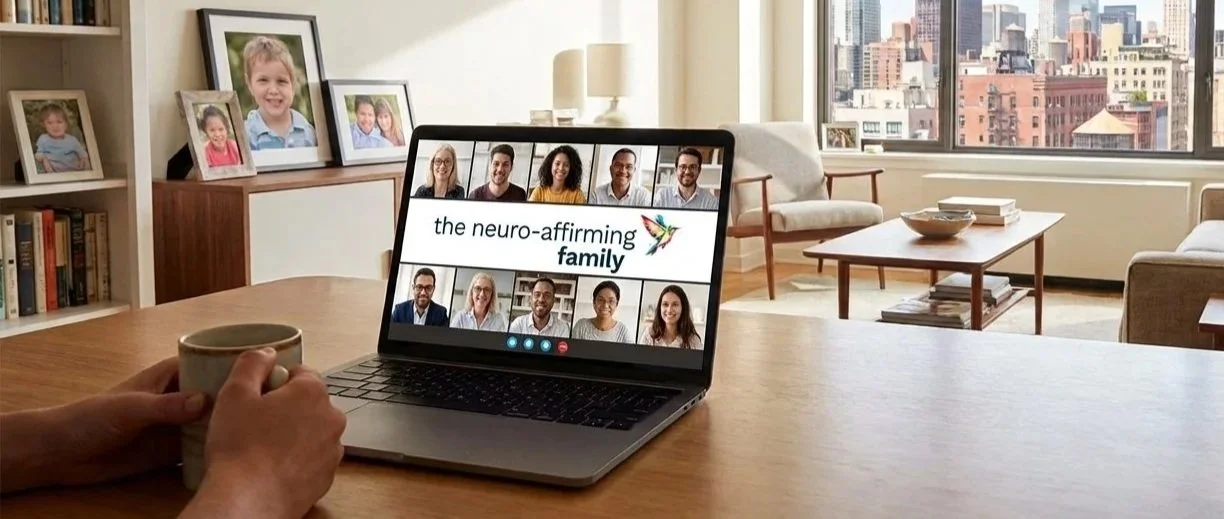
We provide targeted webinars for your parent community to build a unified, neuro-affirming ecosystem. By guiding families through the realities of Autism, AuDHD, ADHD, and SpLDs, we ensure that neuro-affirming principles, practices in your classrooms and pastoral settings are seamlessly mirrored at home. The shared language and understanding builds trust, reduces anxiety, and improves outcomes.
-
evidence:
Our webinars help parents translate complex neurobiology into everyday family life. addressing the ‘why’ behind distressed behaviour. We cover topics like demand avoidance, declarative language, rejection sensitivity, sensory needs, and neuro-affirming boundaries.
Parents are empowered to replace compliance-based discipline with evidence-based, attuned support, fostering psychological safety at home.
-
empathy:
Raising a neurodivergent child in a neuronormative world leaves many parents feeling isolated, judged, and exhausted. Our sessions provide a psychologically safe space where parents realise they are not alone.
When a school invests in supporting the mental health of its parents, the direct result is a more resilient, regulated student.
student-led inclusion
-
reducing stigma:
PSHE sessions teach students that neurodivergence - including Autism, AuDHD, ADHD, and SpLDs - is a natural and valid variation in human cognition.
We help young people to understand that having a different neurological ‘operating system’ does not mean a brain is broken; it simply processes the world differently. This foundational shift eradicates the root causes of stigma and discrimination.
-
double-empathy:
Peer conflict, bullying, and social isolation can stem from neurological differences. We introduce students to the ‘Double Empathy Problem’ - helping peers recognise that communication breakdowns are a two-way street.
By equipping students with the tools to translate, respect, and validate different communication and sensory styles, we actively reduce social friction and foster genuine, inclusive relationships.
-
advocacy:
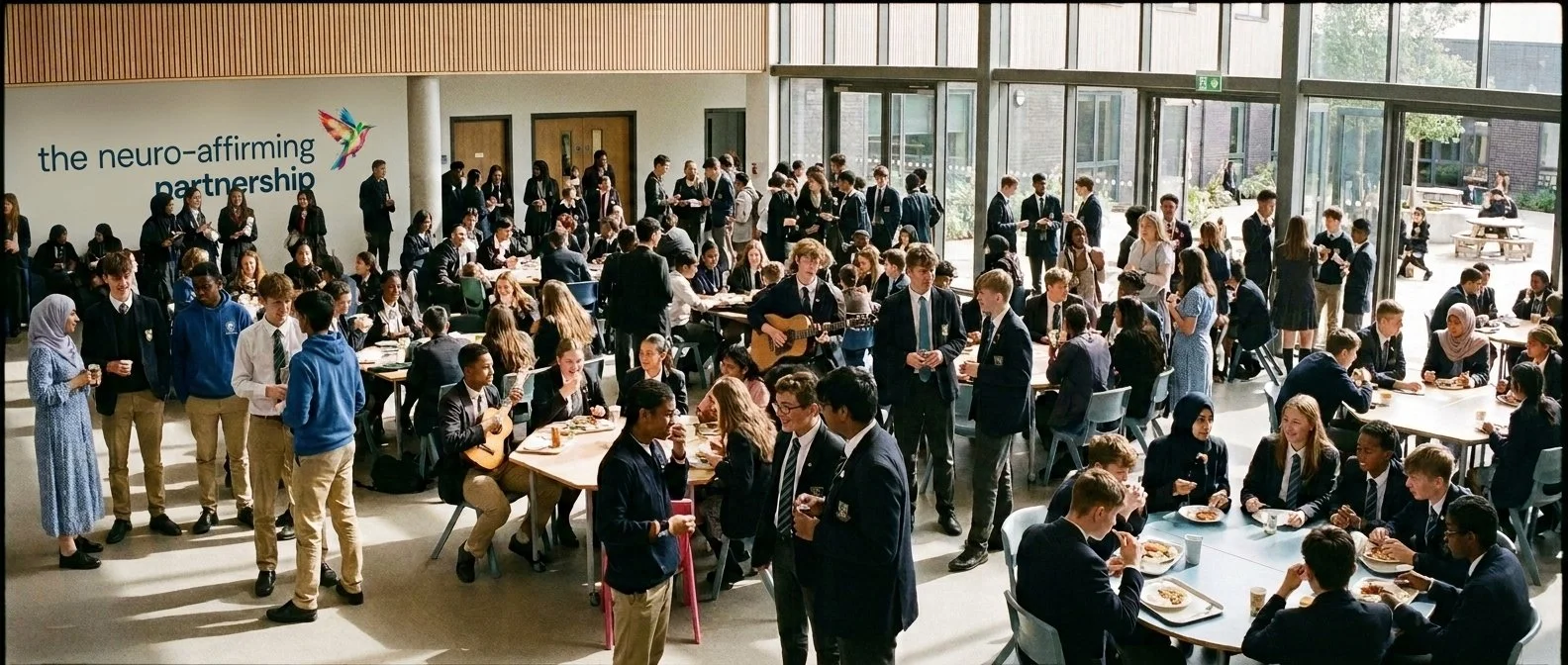
A culture of inclusion can be championed by students. We empower young people to become advocates for a neuro-affirming school ecosystem.
We address the exhaustion of ‘masking’ and the importance of respecting sensory boundaries, cultivating a climate of psychological safety. When students feel safe enough to drop the mask and be authentic, the whole school benefits from a kinder, more engaged, and resilient community.